The National Digital Health Mission Is Ready For Nationwide Rollout Soon

0

Bengaluru: The National Digital Health Mission is ready for a nationwide rollout soon. This was announced by National Health Authority and Ayushman Bharat Chairman Dr Indu Bhushan.

Speaking at the Bangalore Tech Summit 2020 on Thursday, Indu Bhushan said the digital health mission has been launched in six Union Territories of the country and is soon set for an all-India launch.

“Healthcare sector is emerging as one of the largest sectors in India and India is on the threshold of becoming a digital health nation. He said the mission of the new digital health programme is to provide for access and affordable medical health facilities to the citizens,” said Indu Bhushan.

He said under the Ayushman Bharat Universal Health Insurance scheme close to 500 million people of India’s population had been covered during the last one year which is almost half of the country’s population.

Indu Bhushan said under the insurance scheme health coverage up to Rs 5 lakh per household has been provided as medical health coverage across 24,000 networked hospitals.

He said Rs 17,000 crore worth of transactions had been effected covering treatment for 1.4 crore people under the Ayushman Bharat scheme during the last one year.

Indu Bhushan said given its scale of operation of the scheme, Ayushman Bharat is a 100% transaction-based model that runs on robust IT systems without compromising on security and privacy. He said the insurance scheme is data driven and all the gateways are integrated with the applications.

He said the IT framework is further being strengthened and made scalable as the country gets ready to go for the National Digital Health Mission.

Indian Talent Touches Almost Every Part Of Amazon’s Global Offerings: Amit Agarwal

0

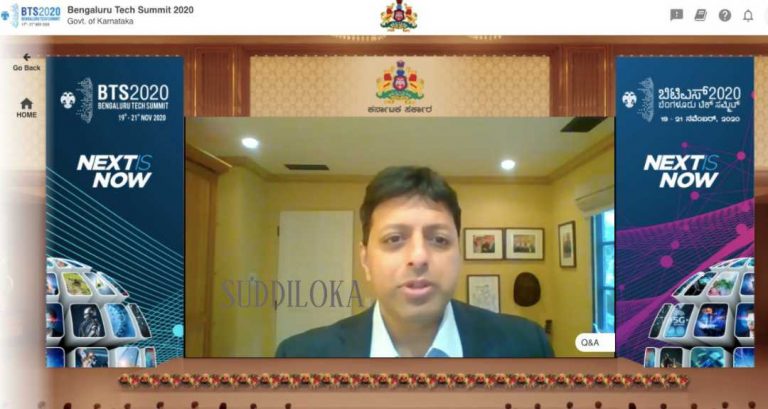
Bengaluru: Amazon Global Senior Vice President and India Country Head Amit Agarwal said the company employs almost 1,00,000 workers in India directly, including tens of thousands of employees in the many global technology teams based out Bengaluru.

Speaking at the Bengaluru Tech Summit on Friday, Amit Agarwal said Indian talent today touches almost every part of Amazon’s global offerings.

“Bengaluru is at the heart of technology and innovation, and we, at Amazon, have certainly been privileged to work with some of the brightest and most talented IT professionals and experience the unique dynamism, resourcefulness, and inventiveness that continues to propel India,” he said.

Praising the state for coming up with the first IT policy of India in 1997, Amit Agarwal said the industry-friendly IT policies of successive state governments, the rich talent pool of highly skilled professionals, high-quality institutes of higher learning, the resilience, tenacity and innovation of companies and start-ups have all made Bengaluru what it is today.

Software development
“Amazon’s own story is strongly tied to this city. I came here in 2004 and got started with handful of software development engineers. I remember we were all writing code huddled in a tiny office space in Divyashree Chambers near Richmond Road. Imagine a typical scrappy Bengaluru start-up, looking to make a difference. It was the beginning of Amazon’s presence in India as the company drew on the talent in this city for a rapidly growing young technology company, then barely 10 years old,” he said.

And again, in 2013, the company set up Amazon.in with a small team, starting with just 100 sellers selling books in 10 cities.

“I remember how we cheered every time an order was placed. We had this zeal to transform the way India buys and sells. Today, it humbles me to see how far we have come – nearly 700,000 sellers, mostly SMBs, offering India’s largest selection of hundreds of millions of products to customers across the country,” he said.

Serves 99% India’s pin codes
The Amazon India CEO also said it is inspiring to hear stories of toys from Channapatna or the traditional sarees from Pochampally selling to customers in Leh in the Himalayan region and Majuli islands in Assam.

“In fact, recently during our Great Indian Festival, nearly 99% of India’s pin-codes placed at least one order in the first 48 hours,” he said.

Looking at the future, he said it promises to be India’s moment in the world and the company’s CEO Jeff Bezos predicted recently that the 21st century promises to be India’s century.

“Technology and mobile internet have transformed daily lives globally, and India is no different. But these are likely to have an even more profound impact on India, as a scalable lever to drive inclusion and equity for society. Urban centres will no longer claim preferential access to products, education, healthcare, or entertainment. MSMEs will not be limited by their local catchment as they dream big,” he said.

Mobile internet
He also pointed out that entrepreneurs will not be held back by their scale, with access to world-class infrastructure at the outset.

“We are at an inflection point, and are likely to look back at mobile internet, and e-commerce in particular, as a social and economic leveller that transformed lives and livelihoods in India,” he said.

Indian e-commerce is early in its evolution, barely 3% of total retail consumption, but is already ushering in faster digitization across the consumption value chain, and enabling expanded access and opportunities for customers and businesses across the country.

“I come across many inspiring examples every day – a school teacher based in Leh is able to access all the art and craft material she needs for her students; a local startup, Jack in the Box, is redefining creativity toys for kids and receiving thousands of orders from customers in the US without having to invest in distribution infrastructure. A digital-first tea brand out of India makes its way on Oprah Winfreh’s favourite list,” said Amit Agarwal.

Doorstep convenience
He also highlighted that ecommerce is blurring the lines between online and offline, between local and global and businesses can seamlessly complement in-store services with doorstep convenience for customers in their locality; and dream beyond to reach customers across India, even globally.

“The entrepreneurial spirit of the Indian SMB is already at play as they embrace e-commerce. Chandrakala Creations from Varanasi, a two-decade-old offline apparel business, decided to go global with Amazon in 2016. Today they are recognised as an Indian fashion brand among customers in the US, UK, Australia, and the Middle East. Tens of thousands of neighbourhood stores across the country are expanding their influence as pickup points, logistics partners, and experience centres, for ecommerce, and truly becoming digital entrepreneurs,” he said.

UK Supports Karnataka’s Climate Change, Green Energy Initiatives

0

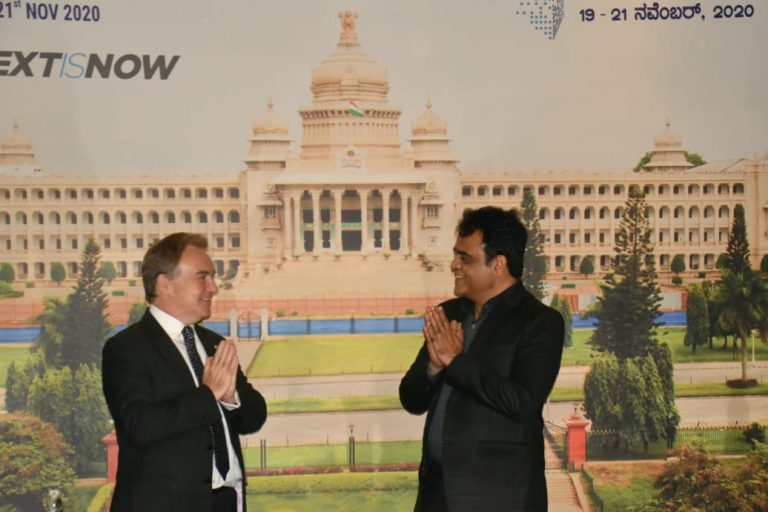
Bengaluru: UK Deputy High Commissioner Jan Thompson lauded Karnataka government’s efforts to become a leading state in tackling climate change and rapid adoption of green energy.

Speaking at the Bengaluru Tech Summit 2020, Jan Thompson said it is interesting to note that Karnataka is leading India in the green initiative by bringing more EVs on roads, installing more charging stations and moving towards green energy.

“We have initiated more partnership with the Karnataka government, especially for electric vehicle ecosystem building and also reduce pollution. We have also a green fund for doing more investment in the space of tech startup in climate change and green energy,” she said.

Jan Thompson also lauded the city level partnership with Bengaluru for launching the Clean Air Testbed Drive initiative on Church Street to reduce pollution.

“We have to scale up Green-tech not only at the industrial level but at an individual level too and chart a cleaner development path. Green-tech also helps us for the sustainable and prosperous future,” she said.

Commenting on UK’s initiative, she said during fiscal 2020 the country has halved emission and it also made sense economically. Besides planning to hold UN Climate Change Conference in 2026, she also highlighted the UK’s continuous action and collaboration with India going forward.

Speaking at the panel discussion, Karnataka Deputy Chief Minister C N Ashwathnarayan said Karnataka is recognised as the nation’s “Startup Capital” and “Innovation Capital” and is home to the Silicon Valley of India, Bengaluru.

“Karnataka is the undisputed leader in the country in sectors such as Information Technology, Machine Tools, Aerospace, Biotechnology, Electric Vehicles, and Electronics. I am delighted to say that Karnataka has also implemented several initiatives aimed at promoting and increasing the use of green technology,” said C N Ashwathnarayan.

He highlighted the fact that Karnataka was the first state in India to introduce an electric vehicle policy aimed at promoting manufacture and use of battery-run green vehicles.

“The state is aiming for 100% electric mobility in certain vehicle segments. Our capital city, Bengaluru, is home to e-mobility startups like AtherEnergy, SUN Mobility, NDS Eco Motors, Yulu and Mahindra Electric,” he said.

Pavagada Solar Park, developed in Tumkur district in Karnataka, is the world’s largest solar park and aims to shift the dependency from conventional power resources to eco-friendly energy resources.

“UK is one of our most important GIA partners, and we are indeed delighted to see our relationship strengthen over the years. The UK has been known for its startup and innovation strength and is known for achievements in Artificial intelligence, Fintech, Regulatory Sandbox and Creative Tech among others. Government of Karnataka has collaborated with the UK have on various occasions like Innovation Challenge Fund and Go Global where Karnataka startups have had the opportunity to grow at a global scale,” said the Deputy Chief Minister.

Going forward, the Deputy Chief Minister said Karnataka and UK will continue to work together to further strengthen and grow our partnership.

“Creative Tech, Data Science and AI and regulatory sandboxes will be few of the areas of focus for Karnataka to work together with the UK counterparts. I would like to wish a successful session for the UK and looking forward to furthering interactions to strengthen our partnership,” he said.

UK Minister of State, Foreign, Commonwealth and Development Office Lord Tariq Ahmad said as economies around the world recover from the impact of Covid-19, this is the time to look to future.

“We must take the opportunity to build back better to create a world that is green, clean and sustainable. We want to work even more closely with India to mobilise global action plan at COP26 because we both lead by example,” said Lord Tariq Ahmad of Wimbledon.

Speaking at the discussion, Deputy High Commissioner Karnataka & Kerala Jeremy Pilmore- Bedford said application of green technology is at the heart of UK’s ambition to build back better from the current Covid crisis.

“Collaboration of innovative startups and companies from UK and India will be key to address climate change issues and secure the future of the planet for generations to come,” said Jeremy Pilmore- Bedford.

Impact of IP on Innovation leading to ease of doing Business

0

Bengaluru: The session on the ‘Impact of IP on Innovation leading to ease of doing Business’ at the Bangalore Tech Summit 2020 highlighted the importance of IP legislative gaps and the way forward for India to become a technological hub.

Eminent speakers from Indian and multinational companies, institutions, government, international agencies and enforcement agencies gave their perspective on how IP on Innovation leading to ease of doing business.

Dr. SK Murthy, Patent Counsel, Intel India said that India has come a long way in IP and demonstrated its will and grit to make its IP system robust and world class.

The new amendments to the IP laws are in the right direction to make India a technological hub. According to him, E-filing, modernization of offices and faster examination of patent claims are commendable effort, but we still have a long way to go.

He is of the opinion that India needs to have a focused effort on simplifying section 3K of our patent law, knowing the status of a patent filed, transfer of IP, enhancing education of IP at all level including judiciary and technology upgradation programmes for the country to get to the next level.

He also called for setting up an IPR Bench at the High Court in Bangalore as the city is the hub of technology and innovation in the country.

According to Kumar Ranganathan, Independent Technology Strategy Advisor, today India exports many goods like textiles, gems, cotton, iron etc. but the margins on these products are very low when compared to products that are IP rich, like a commercial aircraft.

He said that, when it comes to high technology you can compete either on price or on technical knowhow. India still largely competes on price and depends on cheap labour for that, but we must set our goal on competing on IP, as it offers much more sustainable differentiation in the long run.

The focus on IP cannot happen without some significant change in the Indian ecosystem especially with regard to R&D spending. India spend only 0.6% – 0.7% of GDP on R&D, this is very low even when we compare with other BRICS countries. Japan sees 200 times more patent filing than India every year.

Kumar Ranganathan states that until and unless we shift our focus towards R&D India can forget about being a superpower or even achieving tech independence. Therefore the focus on Make in India should not be only on manufacturing but also on making technological knowhow.

For making India a technological super power, Kumar Ranganathan says that India needs a pool of post graduate scientific and technical institutes and get world-class institutions to set up their campuses in India so that talented students should stay in India for higher studies and research. 18% of 1 million foreign students in US are from India. Industry in India should set up global standards with IPs and start selling products to the developed countries.

He also called on for much better collaboration between Industry and academia for research and invest in R&D and innovation rather than just executing someone else’s ideas. He is of the opinion that only with technology and IP India can produce for the world.

Dr. Ravi Tumkur, IP Council, Philips, said that for India to become a technological powerhouse, it should adopt IP regime to changing technological scenario. According to him patent examination should be made faster so that organizations can bring forth their innovations to the market.

He also called on the government to simplify the clause in the new IP Amendment which states that the company should declare the revenue generated by a particular patent as it is difficult to arrive at a value of a component in a product. He says that the new amendment which focuses on the value is going in the wrong direction. He also called on the government to set up a patent office in Bengaluru as it where most innovations happen in the country.

The session also saw Erik Azulay, Director, ACIR, Ramakrishna Thammaiah, Professor of Law at National Law School, and John Cabeca, United States Intellectual Property Attaché for South Asia deliberating on various aspects of Indian and Global patent laws, how India is poised be a global technology hub and the direction in which the country should take to achieve it.

India’s drone industry is fastest growing industry in the world: Dr Kota Harinarayan

0

Bengaluru: India’s drone industry is the fastest growing industry in the world with the second highest in the number of start-ups in the agritech sector according to Dr Kota Harinarayana, Chairman, Board of Governors, IIT, Varanasi.

Answering a volley of questions posed by International Institute of Information Technology Bangalore (IIIT-B) Director Prof.S. Sadagopan in a virtual session as part of the Bangalore Tech Summit 2020, Dr Harinarayana said the use of drones and robotics is becoming beneficial for even small farmers with two acres of land holdings as the technology helps in capturing images as close as one to two metres of the land where troubleshooting is required.

He said satellite images were inaccurate in detecting the problems that exists on farm lands which is now easily identifiable with the use of drones and robotics. He said the use of drones has become an opportunity in agriculture given that its contribution to India’s GDP has declined to 15 percent from 17 percent two years back.

Drones could be used in precision agriculture and help in doubling production.

The chairman of board of governors of IIT, Varanasi said satellite images cannot be used to study crops and drones have thus emerged as a low-cost and a cost-effective solution. He said drones are turning out to be even cheaper than deploying manpower for the purpose.

Dr Harinarayana said drones have emerged as the driving force in data analytics in India. However, he said the drone endurance remains low at about one hour after seeing an improvement from the 40 minutes that it was earlier.

He said many industries have mushroomed in Bengaluru that make cameras for the drones that could be used for surveillance. He said the setting up of startups have been spurred by the stiff import curbs imposed by the Indian government.

He said locusts were thrown away or eliminated with the use of drones in Rajasthan recently. Drones were used to spray insecticides and five such machines were pressed into service to drive away the locusts and help the farmers.

Dr Harinarayana said drones could be used in medical emergencies like organ transplants that will save precious lives and time. He said trials are on to use drones with the ‘108’ ambulance teams. However, fund constraints are awaited to carry out application of drones in medical emergencies.

Prof. S. Sadagopan said IIT-B is showcasing a whole range of technologies at the Bangalore Tech Summit 2020 that are path-breaking and at the cutting edge in terms of technology.

He said the pandemic has thrown up a challenge for IIIT-B and had developed a tech dashboard for governments of Karnataka and Jharkhand. He said the spread of the virus has thrown up a number of opportunities to undertake research work.

Biology And Engineering Are Starting To Create Age of Living Machines

0

Bengaluru: From virus-based batteries, protein-based water filters to cancer-detecting nanoparticles and cognitive bionic limbs, Susan Hockfield, President Emerita, MIT, spoke about the ‘Age of Living Machines’ that biology and engineering are starting to create.

Susan Hockfield was speaking at the BTS2020 Bengaluru Tech Summit, a three-day event that started from Thursday. The theme of this year’s conference is ‘Next is Now’. Over 250 speakers from across the continents spoke on various topics.

Earlier, introducing the keynote speaker, Biocon Founder Kiran Mazumdar Shaw said Susan Hockfield was the first woman and biologist to serve as MIT’s president from 2004-2012.

Speaking about the challenges that we are facing at present, Susan Hockfield said the world population will reach from 7.5 billion to 9.7 billion by 2050, but we are struggling with proper healthcare access, sustainable energy & water and food.

“By 2050, the energy domain is going to double, and this is one of the biggest challenges. In the case of water and food, as the world population increases, we need new farmland,” she said.

From Moore’s law to genomics, the software of biology, in combination with the advances in molecular biology has positioned biology now as a quantified science that can accelerate great synergies with engineering – materials research, micro and nano technologies that will drive a huge adoption of bioengineering in improving the human condition in health, food and energy security and environmental sustainability.

Some cases studies of breakthroughs on living machines described in Dr Hockfield’s book ‘Age of Living Machines’ range from virus based batteries, protein based water filters, cancer detecting nanoparticles, computer-engineering crops and cognitive bionic limbs.

She said the digital technology revolution came from the study of Physics in the 19th century.